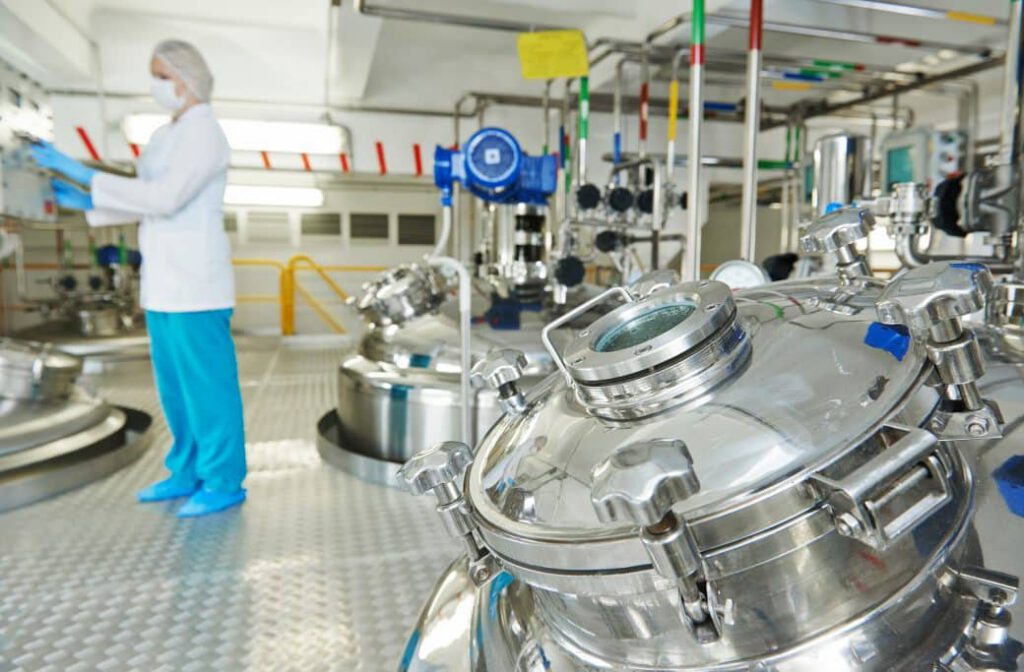
Ethanol is one of the most widely produced organic chemicals in the world, with global volumes dominated by industrial and fuel applications. However, when intended for pharmaceutical use, ethanol must follow a tightly controlled journey that transforms it from an agricultural feedstock into a GMP-certified excipient. This process ensures that the ethanol meets stringent quality, safety, and regulatory requirements.
Step 1: Feedstock Selection
Ethanol production by fermentation begins with natural agricultural materials such as:
- Grain (corn, wheat)
- Sugar beet or cane
- Other starch-based crops
For pharmaceutical ethanol, feedstocks must be carefully sourced to ensure traceability and to prevent contamination with pesticides, mycotoxins or heavy metals.
Step 2: Fermentation and Distillation
In large-scale industrial production, sugars are converted to ethanol by yeast fermentation. The crude ethanol is then purified through multi-stage distillation, often producing industrial-grade alcohols for fuel or chemical use.
For pharmaceutical applications, however, additional controls are required:
- Dedicated or segregated equipment to prevent cross-contamination
- Validated processes that consistently achieve target purity levels
- In-process testing to monitor critical parameters such as water content, fusel oils, and aldehyde levels
Step 3: Refining to Pharmaceutical Grade
To meet pharmacopoeial standards (Ph. Eur., USP, JP), ethanol undergoes further refining steps such as:
- Dehydration to produce ethanol of defined strength (e.g. 96% v/v)
- Filtration and polishing to remove trace organic impurities
- Analytical testing against compendial specifications, including identity, clarity, acidity/alkalinity, methanol, and residual solvent content
At this stage, the product transitions from a bulk industrial chemical to a pharmaceutical excipient.
Step 4: GMP-Controlled Packaging and Distribution
Unlike industrial ethanol, which may be packaged in bulk containers without strict handling protocols, pharmaceutical ethanol must be:
- Filled into clean, dedicated packaging systems under controlled environmental conditions
- Clearly labelled with batch numbers, expiry dates, and storage requirements
- Shipped under validated logistics systems, ensuring no contamination or tampering occurs during transport
Step 5: Certification and Regulatory Assurance
The final stage in the ethanol journey is the demonstration of compliance. For pharmaceutical use, this means:
- GMP certification of the manufacturing site
- EXCiPACT or equivalent certification to independently verify excipient quality systems
- Certificate of Analysis (CoA) issued for every batch, demonstrating conformity to pharmacopoeial standards
While industrial and pharmaceutical ethanol may share the same origin, their journeys diverge significantly. Ethanol destined for fuel or chemical applications is produced in bulk with broad specifications. Ethanol destined for pharmaceutical use must follow a controlled, validated, and certified pathway — from raw material through final packaging — to ensure it is safe, consistent, and compliant.
This transformation is what allows ethanol to move from the field to the pharmacy shelf, supporting patient safety and regulatory confidence at every stage.
At Kimia, we supply EXCiPACT GMP-certified ethanol to pharmaceutical producers worldwide. Click here to learn more about sourcing certified ethanol for your products.